
A Disappointing Durable Goods Order Report
What does it mean for skilled factory and service workers?

We like to keep an eye on published government economic data such as jobs reports, stock and crude oil prices, as they are indicators of economic health.
They’re all relevant to the career changer or trade school student, as ultimately a healthy growing economy means more jobs for skilled workers.
The latest economic report that came across our desk is the March 2026 Durable Goods Order report, published by the U.S. Census Bureau. It is disappointing, but we need to put it in the context of factory workers and service technicians.
What Goods Are We Talking About?
To start with, the term “Durable Goods” means high-value, tangible items—such as construction equipment, commercial aircraft, mining machinery, and industrial tools—designed to last for a long, repeated useful life, typically exceeding three years.
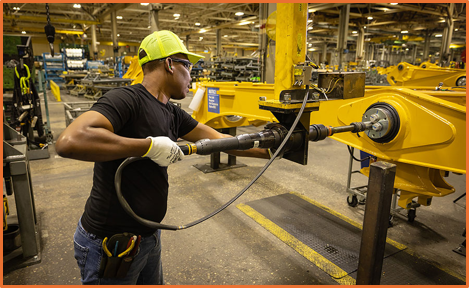
These are a subset of the general “Factory Orders” index, which would include all goods including textiles and food. However we’re focused on the durable goods as they are the “heavy iron” that requires skilled factory workers and aftermarket service technicians.
In other words, the products in the wheelhouse of our VoTech News audience.
Let’s dig into these numbers and understand what it means for the vocational and trades workers who build and service the equipment.
The Numbers Are Flat
The report was released last Friday and it showed new orders for durable goods remained flat from the prior reporting period in December of 2025. The orders number missed consensus expectations for a 1.1% rise. Excluding transportation, orders rose just 0.4%.
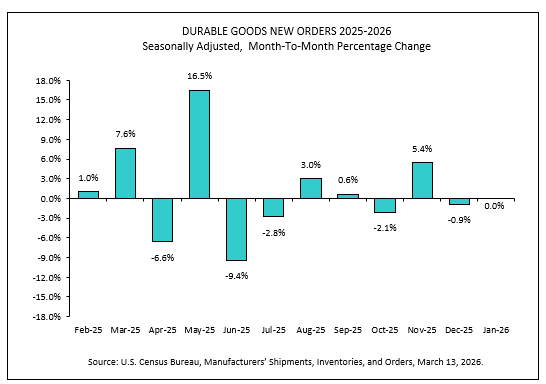
But there were some bright spots. Orders for civilian aircraft jumped 3.8%, helping to offset some of the weakness in other manufacturing sectors such as auto sales.
According to KPMG:
Electrical equipment orders were down 0.6%, despite strong gains of 1.9% and 1.1% in December and November. This category was a bit surprising, given the continued demand for new build construction of data centers.
However, orders for computers and electronics rose 0.8%, benefiting from demand for high-tech computing power used in the new data centers.
KPMG analysts emphasized that the motor vehicle sector faces a challenging year due to the high cost of vehicles, rising running costs and elevated financing rates. The average transaction price of a new vehicle is near $50,000.
These numbers could have been better. Since they do not yet reflect the impact of the Iran war, nor the volatility of the changing tariff rules, it’s hard to foresee much improvement in the next monthly report.
How Durable Goods Drive Service Revenue and Jobs
Quite simply without durable goods deliveries, we wouldn’t have a growing installed base of equipment to install, service and maintain over time.
Many times manufacturers will sell new equipment at lower margins (or sometimes at a loss), only to make up the missing margin in long-term services for the equipment.
This game has been played for ages, as competition on the front end is often fierce. To keep factories open, managers will trade new equipment profit for more lucrative services profit margins.
But skilled trades technicians are needed to extract value throughout the lifecycle of the product, not just on delivery of the equipment from the factory.
The classic “bathtub curve” shows what I’m referring to:
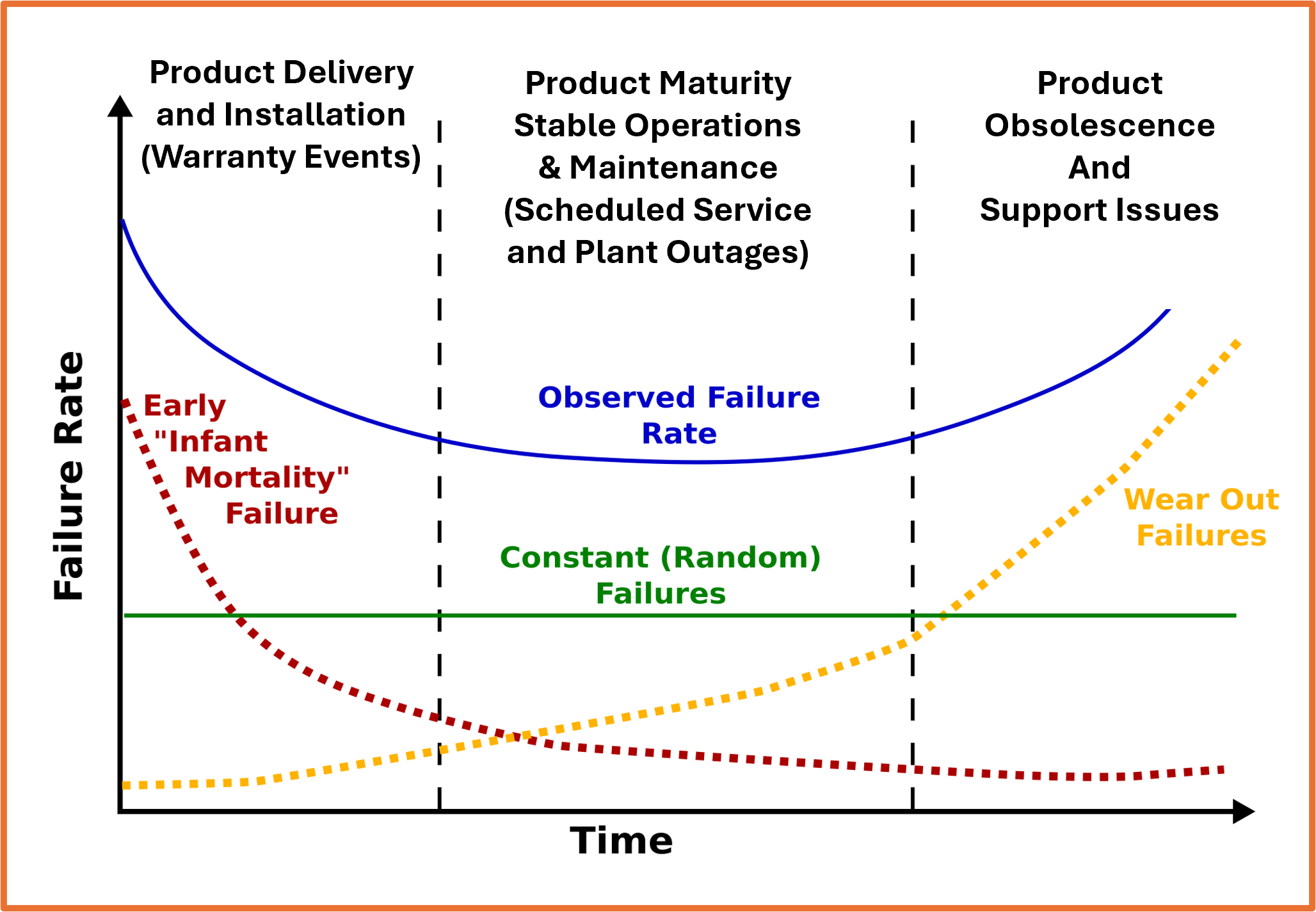
Once built, the equipment is delivered, then installed and operated. Over time, there will be teething issues, warranty fixes and other routine maintenance. The equipment will then enter a period of relative reliability, while the bugs have been worked out and operators and maintenance technicians develop processes for improving reliability.
Then again, after a certain time (and it all depends on the type of equipment), the age and lack of parts affects reliability. More maintenance is required to keep it running, technicians who have spent years gaining experience on the specific type of equipment are in demand as experts.
What are Are Aspiring Factory and Service Technicians to Do?
It’s clear then that we need a healthy economy to propel both sides of the product lifecycle: the skilled factory workers to build the equipment; and, the service technicians to maintain it over its lifecycle.
Students and career changers need to keep their eye on the ball. Think long term, as these durable goods and other reports tell a trend story over time. Counselors should emphasize gaining the skills and certifications needed to support equipment over the lifecycle. This means:
Pick a skillset and get trained
Gain certifications as quickly as possible
Enroll in apprenticeship and work-study programs
Decide if factory or field work is right for you
Get as much experience as possible to excel in your chosen skill
By following the above steps, you’ll already be miles ahead of others who get discouraged by economic reports instead of seeing the long-term opportunities.