
Nuclear Power is Back
But do we have a labor force to support it?

The recent wave of announcements around nuclear power has felt very different from the “nuclear renaissance” headlines Americans heard in the early 2000s. Back then, utilities proposed massive new reactor projects across the country, only for many of them to stall under rising costs, political opposition, cheap natural gas, and long regulatory timelines.
This time, the conversation is returning for a different reason: electricity demand.
Artificial intelligence data centers, reshoring of manufacturing, grid reliability concerns, and the retirement of coal plants are all putting pressure on the U.S. power system. Utilities and policymakers increasingly believe the country will need a combination of natural gas, renewables, and nuclear generation to meet future demand.
It’s clear that nuclear power has re-entered the national power conversation. The question is whether the United States still has the workforce capable of building it.
Plants in the Pipeline
Several advanced nuclear projects are now moving through the federal licensing process. The 960MW X‑Energy in Benton County, Washington is in licensing stage, and Kairos Power has received construction permits for its Hermes test reactors in Tennessee. Holtec International continues advancing plans for small modular reactors at the Palisades site in Michigan.
NuScale Power received federal approval for its uprated reactor design. Utilities including Duke Energy are also moving forward with early site permitting activity.
But one project has clearly emerged as the national frontrunner.
In March, the Nuclear Regulatory Commission issued the first construction permit ever granted for a commercial advanced non-light-water reactor in the United States to TerraPower and its Natrium reactor project near Kemmerer, Wyoming.
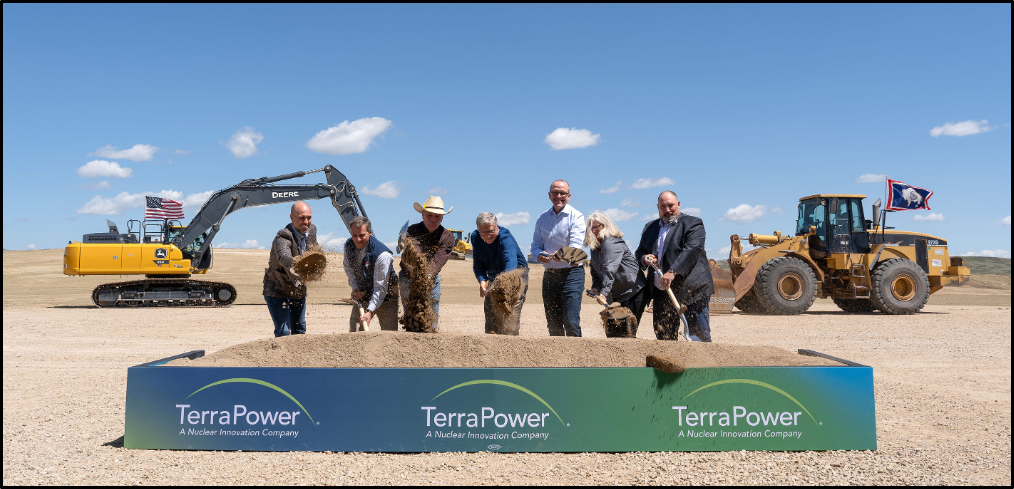
The significance of that milestone cannot be overstated. The United States has not approved a commercial advanced reactor of this type before. TerraPower, backed by Bill Gates and the federal government, is now moving beyond concept art and conference presentations into the reality of steel, concrete, labor crews, and construction schedules.
The Natrium design itself is different from traditional large nuclear plants. Rather than a conventional light-water reactor, TerraPower’s system uses a sodium-cooled fast reactor paired with molten salt energy storage. The initial reactor output is rated at 345 megawatts, with the ability to temporarily boost output to roughly 500 megawatts during periods of high electricity demand.
In addition, the plant is designed with two separate islands: the Energy Island, which contains the conventional thermal plant equipment such as steam turbine hall, heat exchangers, switchgear and substation; and the Nuclear Island which contains the reactor and associated equipment.
This design concept means that construction and eventually operations can be segregated between these conventional and nuclear-qualified areas, which should mitigate schedule and budget risks.
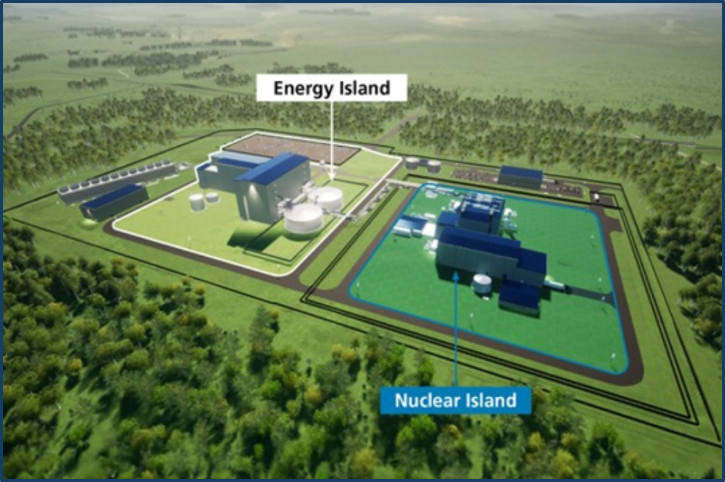
TerraPower and its partners have also repeatedly emphasized modular construction methods, prefabricated components, and simplified plant layouts designed to avoid some of the delays and cost overruns that plagued earlier nuclear projects.
Instead of relying entirely on sprawling field fabrication, portions of the plant are expected to be manufactured and assembled offsite before shipment to Wyoming.
Lessons Learned the Hard Way
That approach reflects a hard lesson learned from the most recent large-scale U.S. nuclear construction effort: the expansion of the Vogtle Electric Generating Plant in Georgia.
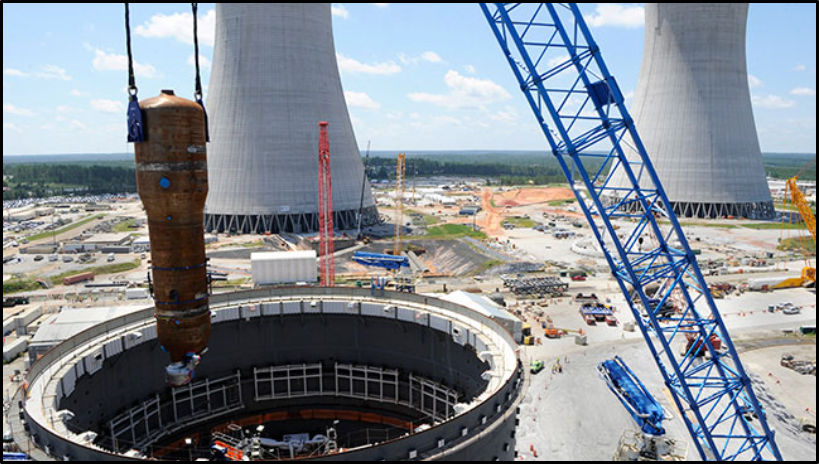
Vogtle 3&4 eventually became operational, but only after years of delays and billions in additional costs. Industry analysts and post-project reviews pointed to several problems that led to the overruns.
According to the AP1000 review conducted by the U.S. Department of Energy Office of Scientific and Technical Information (osti.gov), the Vogtle 3&4 project suffered supply chain disruptions, engineering revisions, inconsistent quality control, shortages of experienced labor, and the difficulty of rebuilding a nuclear construction workforce after decades of inactivity.
However, the report noted that the Vogtle plant experience has now rebuilt “muscle memory” in U.S. nuclear construction, re-established supply chains, and helped recreate a highly skilled nuclear workforce.
Back to the Labor Workforce
But the labor issue, in particular, continues to cast a shadow over the thousands of megawatts in reactor proposals now moving forward.
Unlike a standard commercial construction project, nuclear construction requires a highly specialized workforce operating under strict quality assurance systems. Welders, pipefitters, electricians, boilermakers, ironworkers, and instrumentation technicians may all require additional certifications and procedural qualifications beyond standard industrial work.
The combination of the TerraPower’s segregated energy and nuclear islands, along with more modular construction, is intended to minimize those risks. These design efforts should result in a labor pool that is smaller and more specialized by “island” requirements.
Even then, nuclear construction faces challenges in a state like Wyoming with a total population of about 600,000 residents.
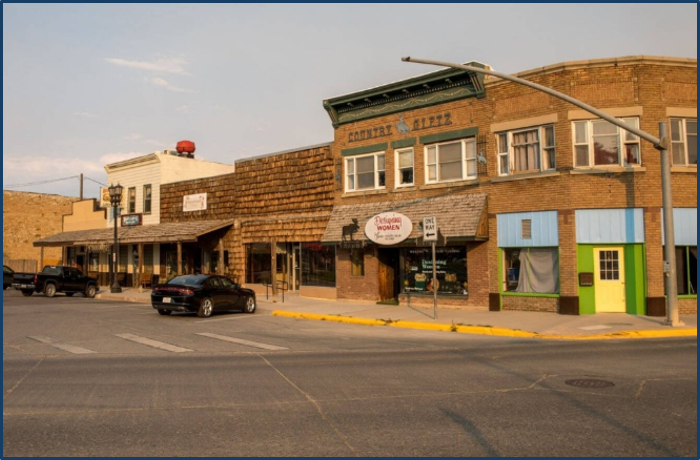
Kemmerer is not Houston, Atlanta, or Chicago. Although the TerraPower plant is built on former coal plant site, Kemmerer is a small town in southwestern Wyoming located hours from major population centers. Salt Lake City is the nearest large metropolitan area, and even that requires a significant drive across state lines.
According to TerraPower, current timelimes show major construction activity stretching through the late 2020s, with commercial operation around 2030 if schedules hold.
That creates a narrow but important window for workforce preparation.
Wall Street appears to have noticed.
Modern nuclear construction remains extremely labor intensive. Vogtle Units 3 and 4 required roughly 70 million work hours and more than 9,000 peak craft workers, according to Bechtel, illustrating the immense labor demands associated with modern nuclear construction. So where are these workers coming from?
Over the past year, firms including BlackRock, JPMorganChase, and Achieve Partners have all announced major workforce development and apprenticeship investments tied to infrastructure, data centers, advanced manufacturing, and skilled trades training.
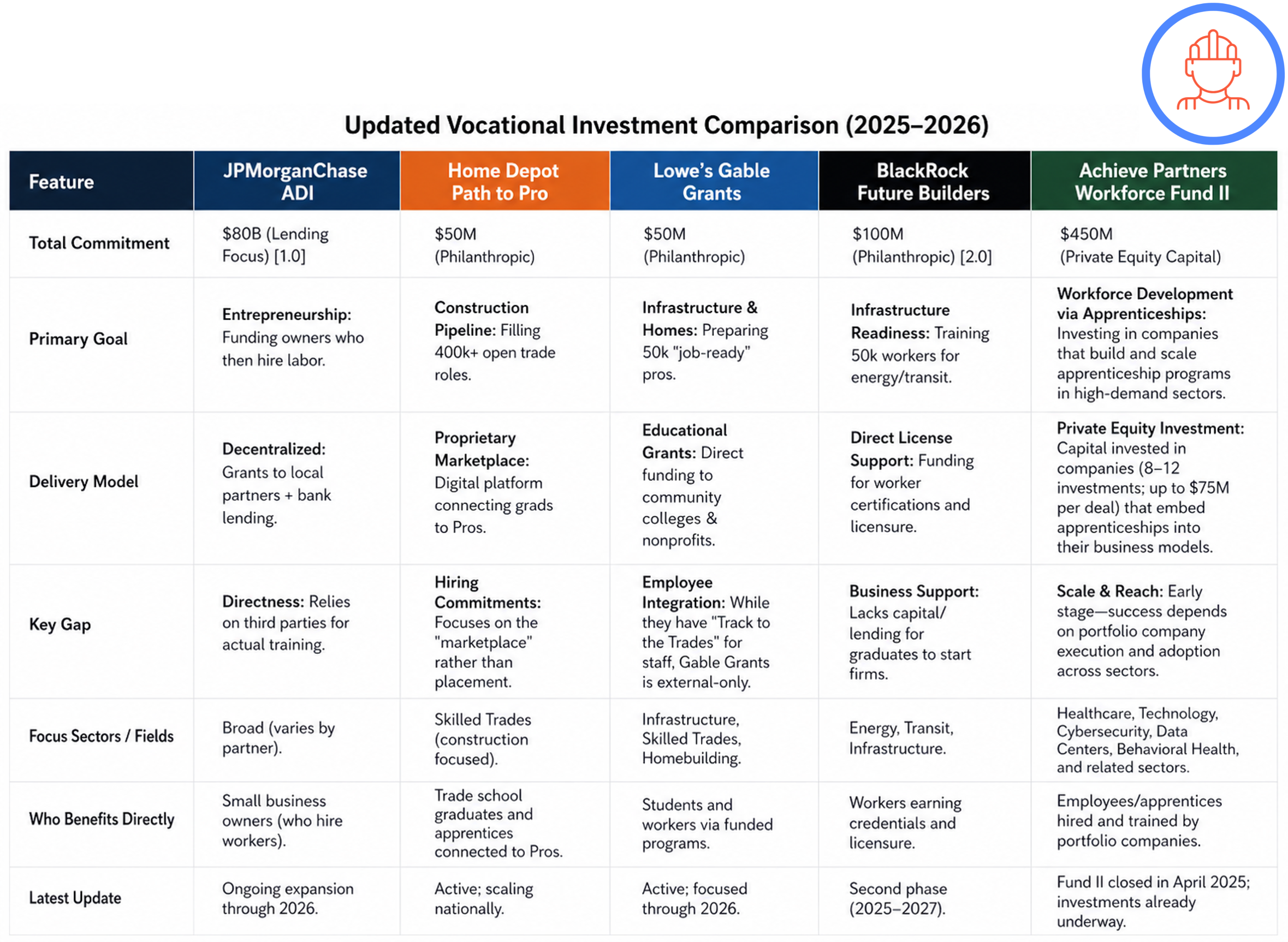
Those announcements reflect a broader realization spreading across industry and finance: major industrial expansion plans are increasingly colliding with labor shortages.
As Larry Fink, CEO of BlackRock, said: “America needs an estimated $10 trillion in infrastructure investment by 2033 to modernize aging systems and build new energy, digital, and AI infrastructure.”
Calling All Vocational Students and Certified Trades Workers
For students and skilled trades workers interested in participating, the likely entry points will not come through TerraPower directly, but through the project’s engineering and construction subcontractors.
TerraPower selected Bechtel as engineering, procurement, and construction contractor for the Natrium project several years ago, giving the Wyoming reactor development one of the most experienced nuclear EPC firms in the world.
Bechtel says the project could require roughly 1,600 workers during peak construction over a multi-year build schedule. Once operational, TerraPower expects to employee roughly 250 personnel for ongoing plant operations.
For skilled workers, the most likely hiring pathways may ultimately flow through Bechtel, union hiring halls, apprenticeship programs, and specialized industrial subcontractors supporting nuclear-qualified construction work.
The larger question may be whether the United States can rebuild the industrial workforce pipeline quickly enough to support multiple advanced reactor projects at the same time.
The permits are beginning to move. The financing discussion is accelerating. Electricity demand is rising. The workforce, not the reactors themselves, may be the pacing item.