
Repairing U.S. Shipbuilding
The U.S. Tries Navigating to a Stronger Maritime Industry

Late last month the Whitehouse announced the release of their Maritime Action Plan, with policy recommendations for rebuilding, protecting, and improving infrastructure related to the nation’s maritime industry.
The forty-two-page report (linked here) outlines the administration’s plans to restore America’s prominence in the shipbuilding industry. Spoiler and mixed-metaphor alert: It’s a long putt in stormy seas.
As stated in the introduction to the Plan:
“Less than one percent of new commercial ships are built in the United States. With only 66 total shipyards—consisting of eight active shipbuilding yards, 11 shipyards with build positions, 22 repairs yards with drydocking, and 25 topside repairs yards—the United States does not have the capacity necessary to scale up the domestic shipbuilding industry to the rate required to meet national priorities. Strategic competitors, meanwhile, dominate the market and build ships at a fraction of the cost of U.S. production.”

That last sentence describes the current market realities: China, South Korea, Japan, and other nations build far more ships at far lower costs than the U.S. and have done so for decades. Blame is abundant: the U.S. Jones Act, offshoring, shareholders and callous CEOs, etc.
This Maritime Action Plan is an attempt to repair the industry. Produced by the Secretary of State with input from multiple stakeholders, the Plan is a result of the President’s Executive Order (E.O.) 14269, signed on April 25, 2025. It is somewhat ambitious in its goals, and heavy on policy recommendations.
It is not, however, a piece of legislation that can be implemented as-is. That would require the Congress, on a bi-partisan basis, to prioritize and fund these recommendations. What should be easy, won’t be.
But in the meantime, let’s dig a little deeper into this document.
Of particular interest to VoTech News is the section titled “Pillar II: Reform Workplace Education and Training.” Anytime the government prioritizes trade skills training, we’re listening. We like the emphasis on the high-skill training and labor that comes with complex industrial projects.

Here are the focus areas in Pillar II. We’ll look at a couple of points within each one:
Expand Mariner Training and Education
Modernize the U.S. Merchant Marine Academy
Increase Support for State Maritime Academies
Maritime Industry Needs – Enhancing Training Capabilities
Expand Mariner Training and Education
The Plan recognizes that the U.S. flagged fleet has shrunk over the decades, which lessens the opportunities for USCG Merchant Mariner Credentialed (MMC) crew members. This lack of opportunity has, in turn, led to fewer credentialed mariners. It’s a spiral we need to recover from.
Having said that, I don’t see massively ambitious programs being proposed. Some are “just do its” and others are calls for significant funding.
To start with, the Plan recommends modernizing existing database systems to track credentialed mariners, and determine who is actively sailing and willing to sail in a national emergency.
It also recommends developing other tools to plan for surge requirements and emergency activations of the Ready Reserve Force (RRF).
In addition, the Plan specifies a Military-to-Mariner (M2M) program by maximizing credit for military training or sea service toward MMC endorsements. This one seems like a no-brainer, and the sooner the better.
There are other recommendations for additional funding to State Maritime Academies (to be discussed later), and calls to leverage existing Pell Grants to increase talent pipeline programs.
There’s an interesting section that discusses increasing simulation programs to speed certification, which sounds like a good opportunity for an entrepreneurial software developer.
Modernize the U.S. Merchant Marine Academy
This section caused me to pause for a moment. Probably like most Americans, I don’t give much thought to the U.S. Merchant Marine Academy. But I know its mission and impressive wartime history.
For example, some 9500 Merchant Mariners were lost in WW 2 representing a 4% casualty rate, which was a higher proportion than any U.S. military branch.
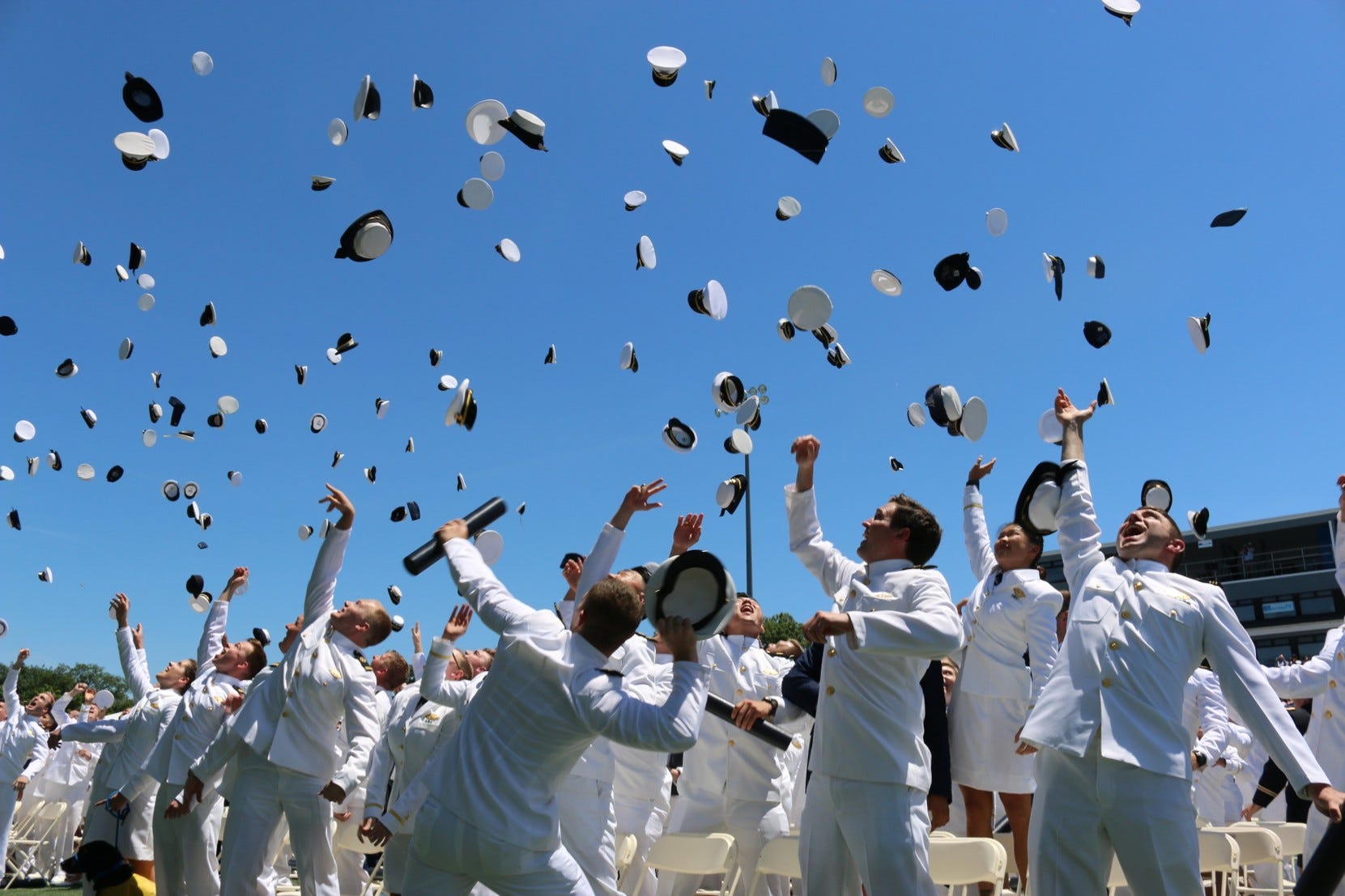
So what happened in the last decades to cause the storied institution to degrade?
Surprising no-one, the report says that funding issues have caused maintenance and upkeep to be deferred for years, leaving the academy adrift.
The Plan aims to correct this situation. It recommends demolishing some buildings and replacing with new, repairing the seawall and dock area, and dredging to mitigate erosion.
The Plan also anticipates a 20 percent increase in student enrollment, and 30 percent increase in faculty to meet expected expansion plans.
To let such an important institution has fall into a state of disrepair is disheartening. We hope these recommendations can be funded and the necessary improvements made as quickly as possible.
Increase Support for State Maritime Academies
There are six State Maritime Academies (SMAs).
California, Maine, Massachusetts, Michigan, New York, and Texas all provide support for maritime education within their state higher education systems.
Although these academies receive funding from the Federal government through grants and other mechanisms, the bulk of their funding comes from their respective state governments.
During the first Trump administration, the Federal government funded new National Security Multi-Mission Vessels (NSMV) to serve as training vessels for the State Maritime Academies. The NSMV mission statement is:
“Educate and inspire future merchant marine offices on board the National Security Multi-Mission Vessels to ensure the United States meets our economic and national security needs through safe and efficient maritime operations.”
The ships are outfitted with numerous training spaces to include eight classrooms, a full training bridge, lab spaces, and an auditorium. The NSMV has space to train up to 600 cadets at sea, maximizing the capability of the ship and its mission to provide our cadets with a world-class education.
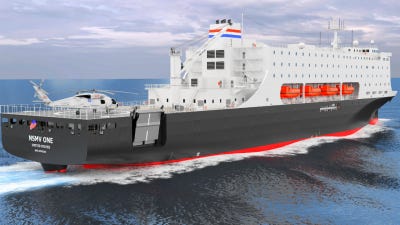
This section of the Plan wraps up with a general call to review existing support for the SMAs, including Student Incentive Payments (SIPs), fuel assistance payments, NSMV program support, and other means to ensure a pipeline of merchant mariners.
Maritime Industry Needs – Enhancing Training Capabilities
Finally, the Plan identifies shortages and skills and shipbuilding and repair industry, as well as the pool of credentialed mariners. It identifies several existing programs that should be scaled to address these shortages and modernize the training pipeline.
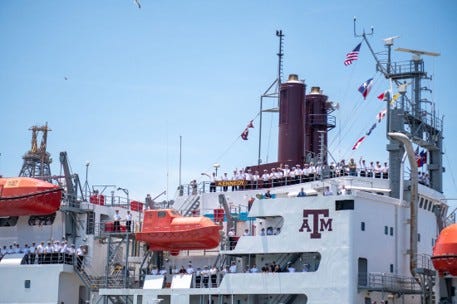
A few highlights:
Develop and Fund Small Shipyard Grant Program
Accelerate Training in Defense Manufacturing
Ramp up and Fund U.S. Center for Maritime Innovation
Expand Regional Partnerships, K-12 Outreach, and Workforce Grants
Modernize and Enlarge USMMA and SMAs
Modify tax code to exclude Merchant Mariner’s earnings while overseas on U.S. flagged vessels
There are other recommendations, and frankly most mirror what we and many others have been saying about improving and supporting Career and Technical Education (CTE) in general. Cross-pollinating these civilian CTE ideas with Merchant Marine and Military needs makes good sense.